
Wellbeing Newsletter For February
Welcome to this month’s wellbeing newsletter, where we explore the foundational steps that support a more empowered, fluid, and self-nurturing approach to wellbeing. Inside, you’ll be guided through the importance of being open to change, practicing self-acceptance as the basis for growth, taking personal accountability for your choices, and building consistency through supportive habits. We also reflect on the value of balancing head and heart, helping you make choices that feel both considered and aligned, so your wellbeing journey feels grounded, sustainable, and truly your own.
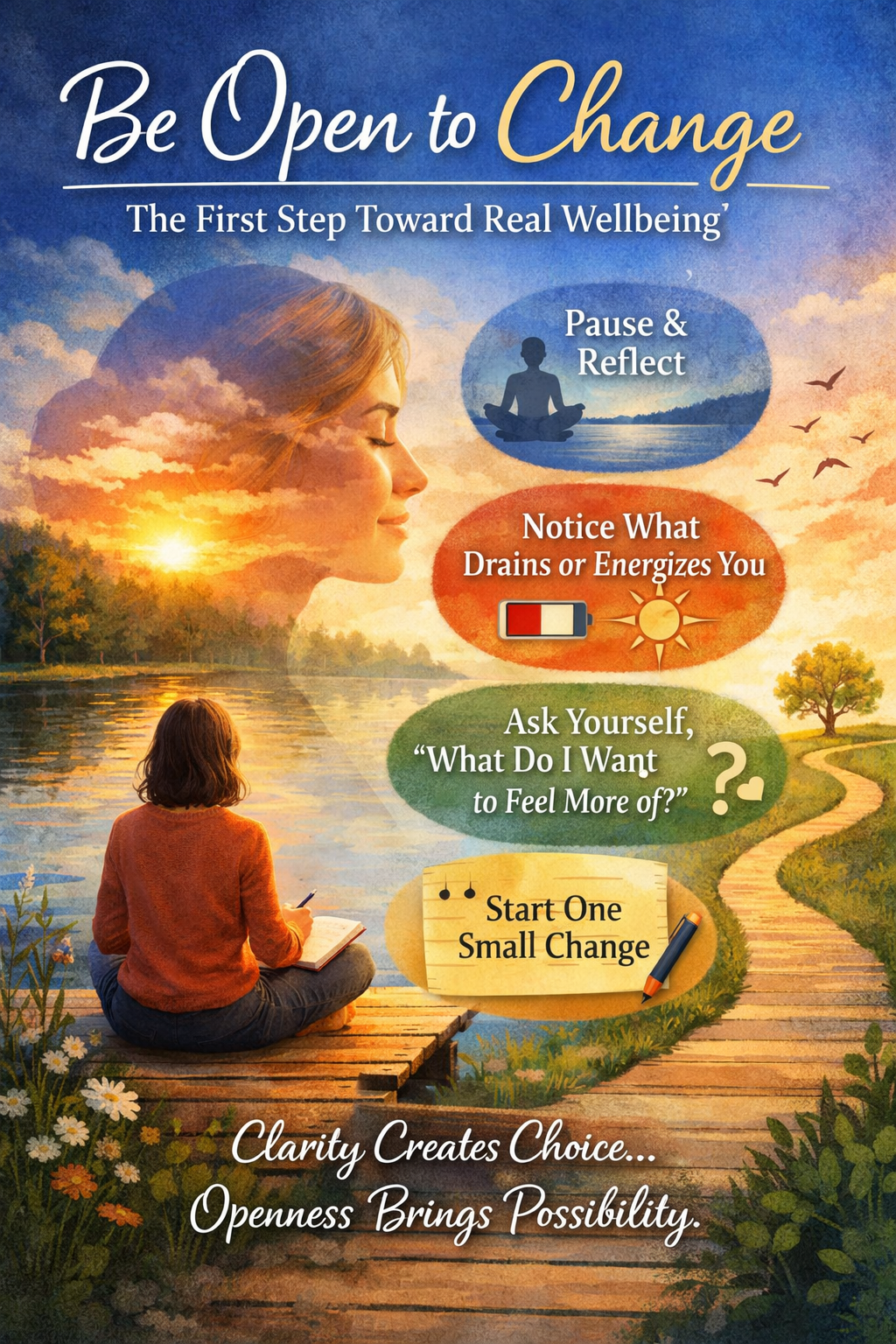
Be Open to Change — The First Step Toward Real Wellbeing
Every meaningful shift in wellbeing begins with a willingness to change. Not dramatic change. Not overnight transformation. Just the quiet decision to become more aware of how you’re living and how you’re feeling — and to consider that something could be different.
Being open to change means allowing yourself to pause and reflect honestly. What feels out of alignment? What drains you? What patterns keep repeating? Self-reflection is not about criticism; it’s about awareness. When you can gently identify what isn’t working, you create the possibility for something new.
Many people stay stuck not because change is impossible, but because they haven’t created space to notice what needs to shift. Reflection builds clarity. Clarity builds choice. And choice is where empowerment begins.
Start simply:
Set aside 10 quiet minutes each week to reflect
Notice what energises you and what depletes you
Ask yourself: What would I like to feel more of in my life?
Write down one small change you’re ready to explore
Change doesn’t require you to become someone else. It simply asks you to become more honest about what you need and more open to supporting yourself differently.
Wellbeing begins the moment you allow yourself to see clearly — and stay open to what that awareness invites.
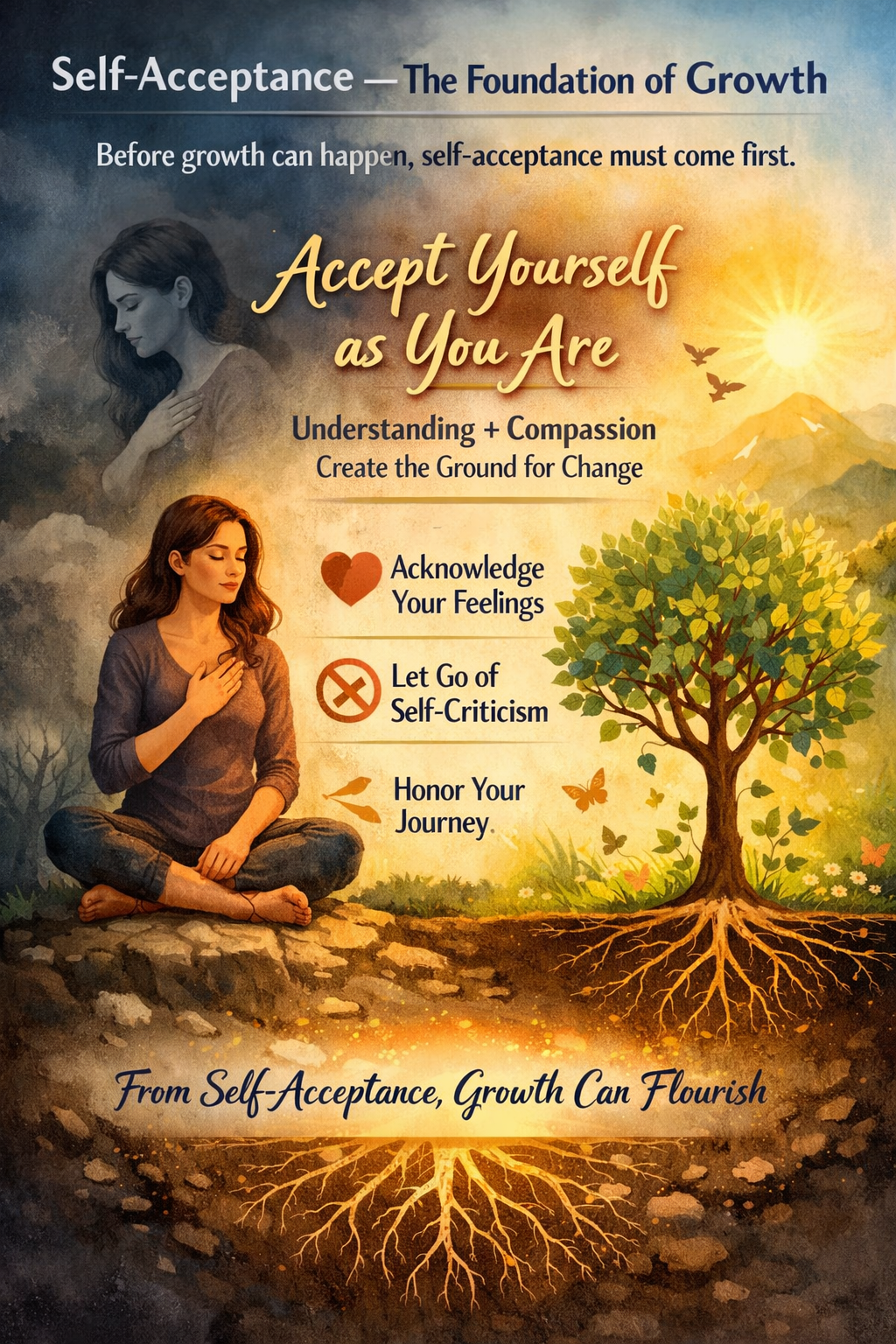
Self-Acceptance — The Foundation of Growth
Before growth can happen, self-acceptance must come first.
It’s tempting to believe we need to fix ourselves before we can move forward. But real, lasting change grows from a place of understanding rather than rejection. When you accept where you are — emotionally, mentally, and personally — you create a stable base from which growth can occur.
Self-acceptance doesn’t mean complacency. It means acknowledging your current reality without harsh judgment. It means recognising that your patterns and coping strategies developed for a reason. When you meet yourself with compassion instead of criticism, you create safety within yourself — and safety is what allows change to stick.
Without acceptance, growth feels forced. With acceptance, growth feels possible.
Try this:
Notice your inner dialogue. Is it supportive or critical?
Replace harsh self-talk with curiosity: Why might I feel this way?
Acknowledge your efforts, even small ones
Remind yourself: you can accept yourself and still grow
Personal growth built on self-rejection rarely lasts. Growth built on self-acceptance becomes sustainable, steady, and kind.
The more you accept yourself as you are, the easier it becomes to become who you’re ready to be.
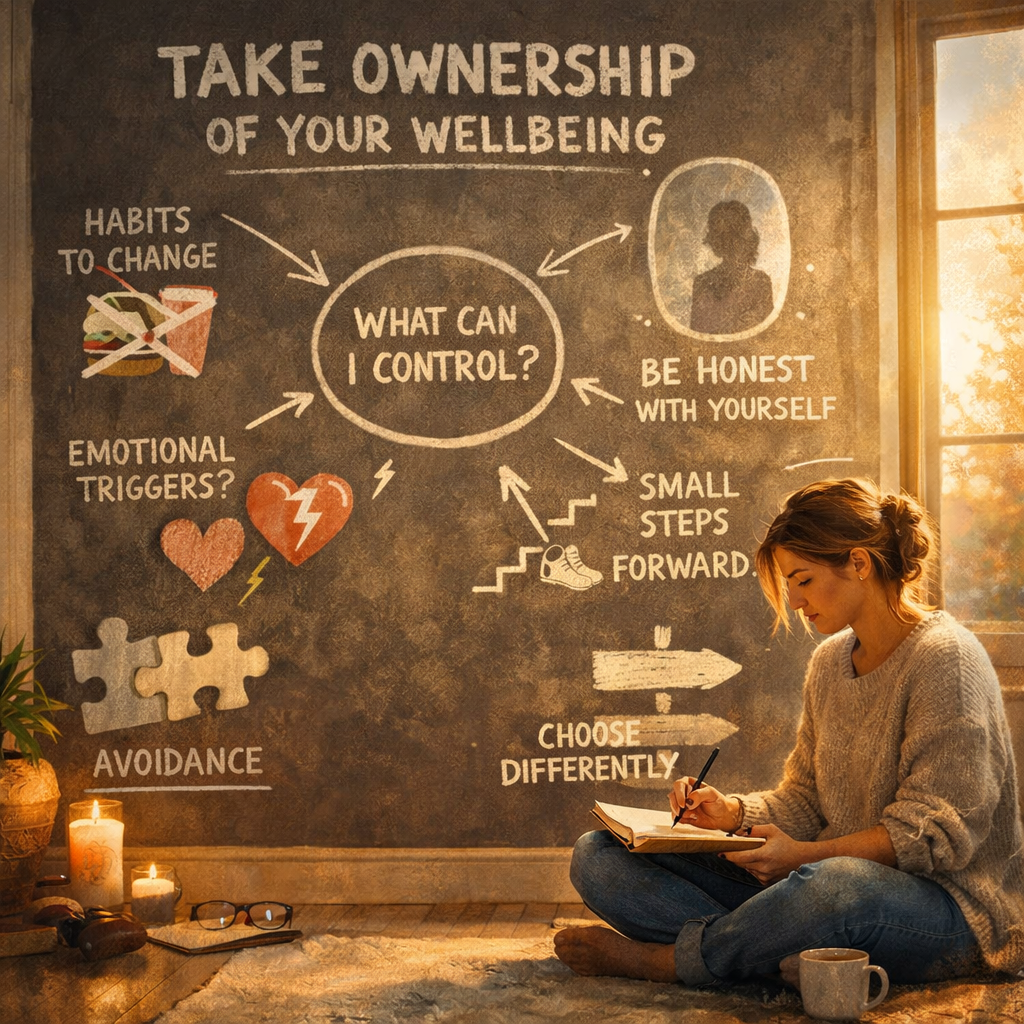
Personal Accountability — Taking Ownership of Your Wellbeing
Empowered wellbeing requires personal accountability. This isn’t about blame. It’s about recognising that your choices, behaviours, and patterns play a powerful role in shaping your experience of life.
At times, it’s easier to focus on external circumstances. But real change begins when you gently ask: What part of this is within my influence?
Taking responsibility for your responses, habits, and beliefs gives you back a sense of agency. It reminds you that you’re not powerless — you’re participating in your own life.
Accountability means being willing to notice when certain behaviours or thought patterns are no longer supporting you. It means acknowledging when something needs to shift, and choosing to respond differently moving forward.
This might look like:
Recognising unhelpful habits and choosing alternatives
Noticing recurring emotional triggers
Being honest about what you avoid
Making small, intentional adjustments
Personal accountability isn’t harsh or rigid. It’s grounded and empowering. It allows you to move from feeling stuck to feeling capable.
When you take ownership of your wellbeing, you stop waiting for change and start creating it.
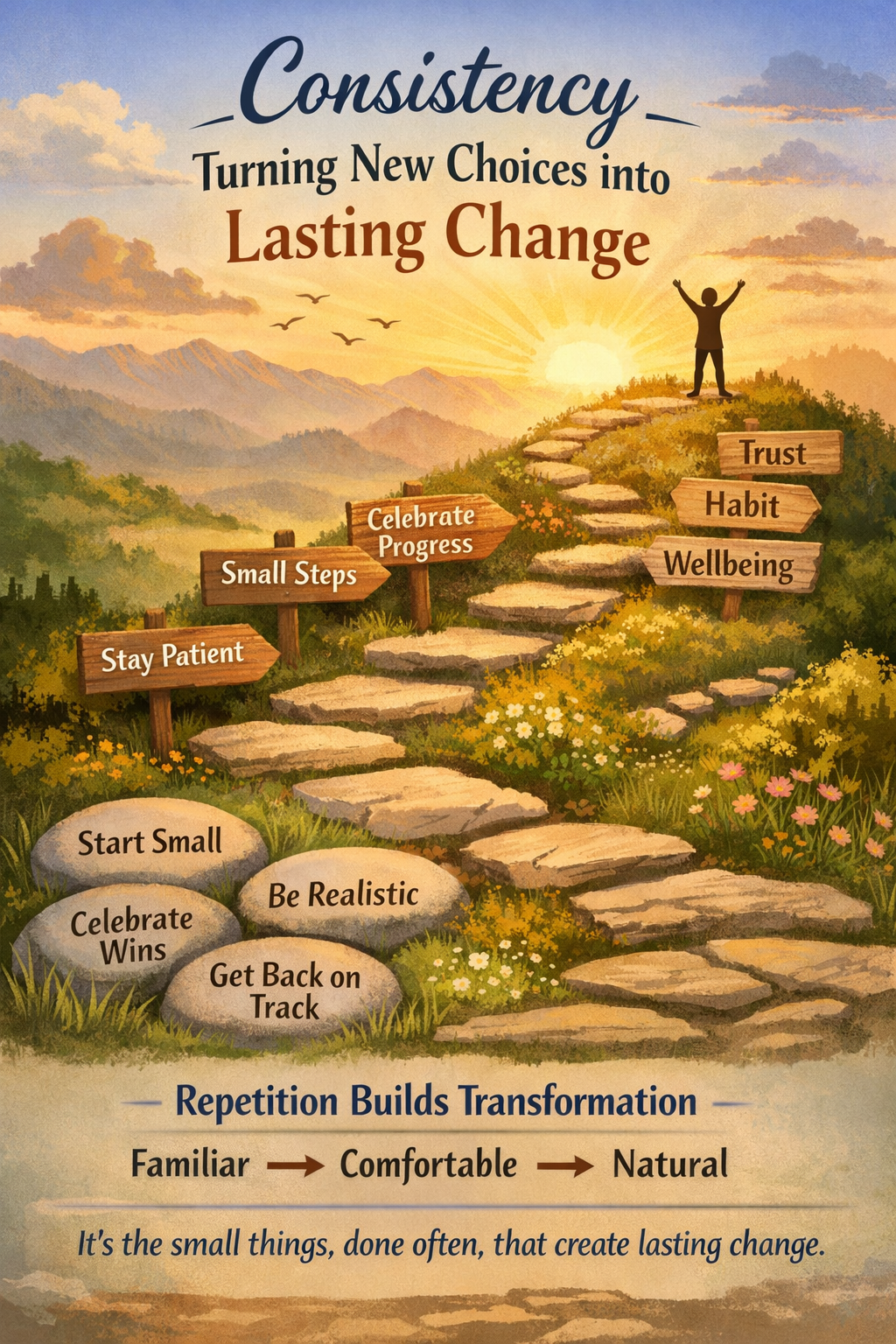
Consistency — Turning New Choices Into Lasting Change
Insight is powerful, but consistency is what creates transformation.
It’s easy to feel motivated at the start of a wellbeing journey. The challenge comes in maintaining small, supportive actions over time. True change happens not through one big effort, but through repeated, gentle practice. Each time you choose a new behaviour — even in a small way — you reinforce a more supportive pattern.
Consistency builds trust with yourself. It tells your mind and body: I am someone who shows up for myself regularly.
New behaviours eventually become familiar. Familiar becomes comfortable. Comfortable becomes natural. This is how healthier patterns become part of who you are.
Support consistency by:
Choosing one or two small habits rather than many
Keeping expectations realistic
Celebrating small wins
Returning to the practice even after missed days
You don’t need perfection. You need repetition.
Over time, what once felt effortful becomes instinctive. The small actions you repeat today become the steady wellbeing you experience tomorrow.
Consistency is not about doing everything. It’s about doing the right small things, again and again, until they support you naturally.
Head and Heart
Alongside reflection and action, it’s important to step out of constant thinking and reconnect with how things actually feel. The mind can be persuasive, full of plans and convincing narratives, but your heart often offers a quieter, more grounded sense of what is right for you. Developing the habit of pausing and asking, How does this feel for me? helps you move from autopilot into presence. Rather than following thoughts alone, allow both head and heart to have a voice — letting logic guide you while your inner sense checks whether something feels aligned, steady, and supportive. When you learn to balance clear thinking with honest feeling, your choices become more considered, more authentic, and more supportive of your overall wellbeing. Over time, this balanced awareness can become a trusted inner guide for how you move through your life.
